Peacock Design Review: Real Embroidery Insights
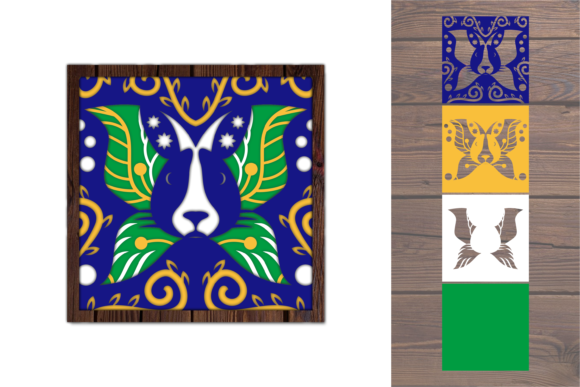
As a professional designer and product reviewer, I approach every new asset with a critical eye for production viability. When evaluating the Peacock multilayer cut file design, my immediate focus is not just on its aesthetic beauty, but on how it translates from a digital screen to a tangible, stitched reality. This design falls under the Shapes category and is provided as a 3D SVG, EPS, and PDF, which suggests versatility for both digital cutting machines and embroidery digitizing software. However, having a vector file is only the starting point. The true test lies in whether this intricate, layered motif can withstand the rigors of needle and thread while maintaining the visual impact necessary for commercial or high-end personal projects.
First Impressions and Visual Hierarchy
Upon opening the files, the Peacock design presents a sophisticated silhouette that balances organic curves with structured layering. The mood is undeniably elegant and slightly exotic, making it distinct from generic bird motifs often found in mass-market libraries. For an embroidery designer, the "multilayer" aspect is the most significant feature. In vector form, these layers are clean, but in embroidery, they represent opportunity and risk. The layout naturally draws the eye upward and outward, mimicking the fanning of feathers, which creates a dynamic sense of movement even when static.
This visual personality dictates where the design belongs. It feels too formal for a playful toddler’s bib but perfect for a boutique tote bag design or a premium throw pillow. The complexity of the shape implies a certain level of craftsmanship; if executed well, it elevates the perceived value of the finished product. As a 3D SVG, the depth is inherent in the file structure, but achieving that dimensionality in embroidery requires careful planning regarding stitch types and layering order to avoid a flat, lifeless result.
Real-World Application: The Custom Tote Bag Test
To truly judge this asset, I mentally placed it into a recent client scenario: creating a line of upscale canvas tote bags for a local artisan market. Canvas is a forgiving fabric texture, but it demands bold lines. In this context, the Peacock design serves as a centerpiece rather than a subtle accent. Because the file includes EPS and SVG formats, importing it into digitizing software to create a custom machine embroidery design was seamless. I envisioned using a combination of satin stitch for the outer contours to provide a smooth, reflective border, and fill stitch for the interior feather layers to build texture without excessive density.
For this specific handmade product, the multilayer nature allowed for color blocking that matched the client’s brand palette. Instead of a single-color silhouette, the separate layers enabled a gradient effect using three complementary teal and gold thread colors. This application transformed the Peacock from a simple shape into a rich, tactile experience. Customers at craft fairs respond to this level of detail; it signals that the item is a deliberate creation, not a quick print. However, this success relied entirely on respecting the design's geometry. Had I attempted to shrink this complex shape down to a pocket-sized logo, the distinct layers would have merged into an indistinguishable blob during stitching.
Navigating Fabric Limitations and Technical Constraints
While the Peacock shines on stable mediums like canvas or denim, it requires caution elsewhere. I would advise against using this specific multilayer design on stretchy knits or lightweight performance fabrics without significant modification. The sheer number of layers and potential stitch density required to render the 3D effect can cause puckering or distortion on unstable grounds. If you are planning sweatshirt embroidery or baby clothes, you must simplify the design. Perhaps use only the primary outline and one inner layer, utilizing running stitch instead of dense fills to maintain garment drape and comfort.
Dark fabrics also present a challenge. Intricate internal details in a peacock’s plumage can get lost against navy or black backgrounds unless there is sufficient contrast in the thread colors or an underlying light-colored applique base. Furthermore, curved surfaces like caps are generally unsuitable for this specific layout. The wide, fanning aspect ratio of the Peacock fights against the cylindrical curve of a hat, leading to registration issues where layers fail to align perfectly. Stick to flat hooping areas for this design to ensure professional results.
Commercial Viability for Etsy Sellers and Small Businesses
For Etsy sellers and creative entrepreneurs, time is money, and re-hooping is the enemy of profit. The Peacock design, due to its detailed layering, may require precise alignment if split across multiple hoop sizes. Before listing any finished product or digital embroidery file derived from this asset, you must verify your licensing terms. Ensure you have the right to sell physical items or modified digital assets. Assuming compliance, this design has strong commercial potential because it bridges the gap between traditional folk art and modern vector aesthetics.
When creating printable mockups for your shop listings, utilize the provided PDF or SVG to showcase crisp, scalable previews. However, always pair these with photos of actual stitched samples. Buyers need to see how the theoretical layers translate to real thread. A digital rendering cannot convey the sheen of rayon thread or the texture of polyester fill. Showing the physical reality builds customer trust and reduces returns caused by unmet expectations. This transparency is what separates successful small shop products from amateur listings.
Essential Pre-Production Checklist for Makers
Before committing this design to a final project, adhere to a strict testing protocol. Professional results are rarely accidental; they are engineered through preparation.
- Test Stitch on Scrap: Never run the full design on your final product first. Use a scrap of the exact fabric and stabilizer combination intended for the project to check for registration errors between layers.
- Evaluate Stabilizer Needs: Given the multilayer construction, assess whether a tear-away, cut-away, or wash-away stabilizer is appropriate. Heavier designs on lighter fabrics almost always require cut-away support to prevent warping over time.
- Check Thread Contrast: View your thread selection in natural light. What looks distinct on a monitor may blend together in thread form. Ensure each layer of the Peacock is visually distinguishable to preserve the 3D intent.
- Verify Hoop Size Compatibility: Confirm the design dimensions fit comfortably within your machine’s maximum stitch area with adequate margin for hoop grip. Do not push the limits of the hoop edges.
- Inspect Small Details: Zoom in on the digitized version to ensure tiny feather tips are large enough to stitch cleanly. Features smaller than 2mm may need to be removed or converted to running stitches to prevent needle breaks or thread bunching.
- Review Washability: If the end use is a tea towel or apron, test wash the sample. Complex layered designs can trap moisture or degrade if the stabilizer wasn't properly removed or if the stitch density was too high for frequent laundering.
Final Thoughts on Design Integrity
The Peacock multilayer cut file is a robust asset for the serious maker. Its strength lies in its adaptability across different production methods, from vinyl cutting to embroidery. However, its complexity demands respect. It is not a "set and forget" design; it is a foundation for creative interpretation. Whether you are producing personalized gifts, commercial embroidery patches, or nursery decor, the key to success is matching the design’s inherent elegance with appropriate technical execution. By understanding the interplay between the digital file and the physical constraints of needle and thread, you can transform this beautiful shape into a product that delights customers and stands the test of use.