Lantana Calippo Paper Flower Templates Review
First Impressions: Translating Paper Aesthetics to Thread
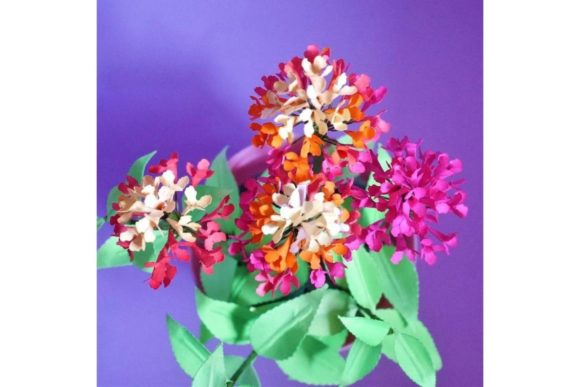
As a designer who constantly bridges the gap between digital assets and tangible textiles, I approach every new file with a specific question: will this actually work when needle meets fabric? When I first opened the Lantana Calippo Paper Flower Templates, my immediate reaction was one of appreciation for clean geometry. Although these are marketed as paper templates in SVG, Studio, and Scan formats, the vector lines possess a structural integrity that appeals directly to an embroidery digitizer’s eye. The mood is undeniably cheerful yet sophisticated, capturing the clustered, vibrant essence of lantana blooms without becoming visually chaotic.
For those of us in the craft business or running an Etsy seller account, visual personality is everything. This design avoids the overly complex shading that often gets lost in translation from screen to stitch. Instead, it offers distinct petal separation and layered depth. Even though the product description highlights its ease for paper crafting, I see immense potential for adapting these vectors into a stunning applique design. The "Easy" difficulty rating suggests open spaces and manageable curves, which is exactly what we want when creating custom apparel or delicate baby embroidery where dense stitching can ruin the drape of the fabric.
Real-World Application: Designing a Botanical Tote Bag Collection
To truly evaluate this asset, I mentally placed it into a current client project: a line of natural canvas tote bags intended for a boutique garden center. My goal was to create a tote bag design that felt handmade and organic rather than mass-produced. The Lantana Calippo templates provided the perfect silhouette for this. Because the original files are vectors, I could easily scale the flower clusters to fit a 5x7 hoop without losing edge definition, a critical factor when preparing a commercial embroidery job.
In this scenario, I envisioned using the template outlines as guides for raw-edge appliqué. The distinct petal shapes allow for individual fabric placement, creating a textured, 3D effect that mimics the original Paper Flowers concept but with textile warmth. For an Etsy seller looking to expand their small shop product line, this versatility is gold. You aren't just buying a static image; you are acquiring a foundational shape that can be interpreted through cottons, linens, or even felt. The resulting finished product carries a professional polish because the underlying geometry is sound. Customers respond to this clarity; it signals that the handmade product was designed with intention, not just traced hastily from a low-resolution source.
Navigating Fabric Variables and Stitch Constraints
While the Lantana Calippo Paper Flower Templates are versatile, practical experience dictates caution depending on your substrate. If you are planning sweatshirt embroidery, remember that fleece and French terry have significant texture. The fine details inherent in floral templates can get swallowed by the nap of the fabric. In these cases, I recommend simplifying the inner petal details and relying on bold outer shapes. Conversely, for lightweight fabrics like voile or lawn used in baby embroidery, the "Easy" nature of this design is a safeguard. It likely won't require excessive stabilization layers that would make a baby garment stiff and uncomfortable.
Be particularly mindful if you are attempting this on stretchy knits or curved surfaces like caps. While the SVG format allows for resizing, physical distortion during hooping is inevitable. Always test your adapted embroidery file on a scrap of the exact fabric you intend to use. If you are converting these templates into a satin stitch border, ensure the column width is appropriate for the fabric weight; too wide on thin cotton causes puckering, while too narrow on denim looks lost. For holiday embroidery projects where these flowers might serve as accents on stockings or tree skirts, consider how the design interacts with pile fabrics. You may need to add a knockdown stitch beneath the floral elements to ensure the Lantana Calippo shapes remain crisp and legible against a fuzzy background.
Elevating Brand Value Through Intentional Design Choices
Using high-quality base templates like Lantana Calippo impacts more than just the immediate project; it influences buyer engagement and brand perception. When a customer sees a personalized gift featuring well-proportioned florals, they perceive higher value. Sloppy vectors result in jagged stitches and misaligned appliqués, which erodes trust. By starting with a professionally structured template, you ensure that your design assets maintain consistency across different products, whether it is a printed mockup for your website or the actual embroidered patch on a denim jacket.
This consistency builds recognition. If you sell digital embroidery file adaptations or finished goods, the clean aesthetic of these templates helps establish a cohesive shop identity. They strike a balance between whimsical and modern, making them suitable for both nursery decor and adult fashion accessories. Furthermore, because the design is rated "Easy," it reduces production time and error rates. Less time troubleshooting registration issues means more time focusing on marketing and fulfilling orders, a crucial efficiency for any creative entrepreneur.
Essential Technical Notes for Embroidery Adaptation
Before you load these templates into your digitizing software or cutting machine, adhere to these professional best practices to ensure success:
- Verify Licensing Terms: The product includes PDF instructions and video tutorial links. Review these documents thoroughly to confirm if you are permitted to sell finished embroidered items or derivative digital files. Never assume commercial rights based solely on the file format.
- Test Stitch Density: Since this is originally a paper template, it lacks inherent stitch data. When digitizing, adjust your stitch density based on fabric type. Use lighter density for sheers and standard density for quilting cottons to prevent bulletproof stiffness.
- Check Hoop Size Compatibility: Before committing to a large-scale embroidery project, measure the design against your available hoops. Resizing vectors is easy, but resizing established stitch files can distort satin stitches. Plan your layout within your machine's maximum field first.
- Evaluate Thread Color Contrast: Lantana flowers are naturally multi-tonal. Test your thread colors on both light and dark backgrounds. What pops on white canvas might vanish on navy twill. Create a grayscale mockup to check value contrast independent of color.
- Stabilizer Selection is Key: Do not rely on guesswork. For woven fabrics, use a tear-away or cut-away stabilizer appropriate for the stitch count. For knits, always use a fusible no-show mesh to prevent stretching during the stitching of these floral shapes.
- Inspect Small Details: Zoom in to 400% in your software. Ensure that tiny petal tips or stamen details are large enough to be stitched cleanly. If a detail is smaller than 2mm, consider removing it or converting it to a simple running stitch accent to avoid thread breaks and bird nesting.
The Lantana Calippo Paper Flower Templates offer a fantastic foundation for makers willing to look beyond the paper craft label. With thoughtful adaptation and proper testing, these shapes can transform into beautiful, profitable embroidery assets that resonate with customers seeking quality handmade goods. Whether you are creating a signature custom apparel line or a unique holiday gift, respecting the technical requirements of embroidery while leveraging the beauty of this design will yield professional, lasting results.