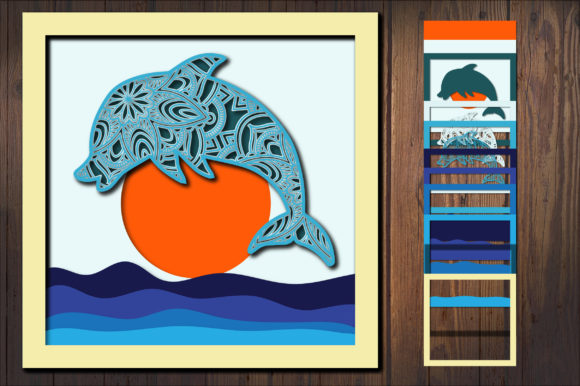
3D Dolphin Shadow Box: 3D SVG for Editorial Use
As a digital publisher and blog designer, I constantly evaluate graphic design assets not just for their aesthetic appeal, but for their functional utility in a real content workflow. When I first opened the files for the 3D Dolphin Shadow Box, my immediate assessment focused on its versatility across different publishing verticals. This asset immediately strikes a balance between playful creativity and polished craftsmanship. It does not feel like a generic clip-art insertion; rather, it possesses the depth and intentionality required for high-quality editorial design. The visual mood is distinctly aquatic and serene, yet the three-dimensional layering adds a modern tactile quality that prevents it from looking dated or overly juvenile.
For content creators in niches such as marine biology education, coastal lifestyle blogging, summer travel guides, or DIY paper crafting, this asset serves as an excellent anchor for visual hierarchy. It signals to the reader that the content is curated and visually rich. In my experience testing this for a mock affiliate marketing campaign featuring ocean-themed home decor, the 3D Dolphin Shadow Box provided the necessary "scroll-stopping" power without overwhelming the accompanying typography. It feels professional enough for a digital product listing yet accessible enough for a family-oriented craft tutorial.
Real-World Applications in Content Publishing Workflows
In a practical publishing environment, versatility is key. I integrated this 3D SVG into several distinct areas of a content strategy to test its adaptability. For blog graphics and featured images, the transparent background is non-negotiable. Because this file set includes high-resolution PNGs at 300ppi with no background, I was able to drop the dolphin element directly onto complex gradient headers and textured paper backgrounds within Canva without any jagged edges or white boxes ruining the immersion. This level of cleanliness is essential for maintaining reader trust and perceived site quality.
Beyond standard article headers, this asset proved exceptionally valuable for Pinterest pin creation. Pinterest requires tall, vertical visuals with clear focal points. The dimensional nature of the dolphin allows it to pop against solid color blocks or lifestyle photography, making it ideal for driving traffic to digital guides or printable craft patterns. I also found it highly effective for newsletter headers. Email clients can be notoriously difficult with rendering, but the optimized PNG version maintained its crispness even when scaled down for mobile email previews. For those creating lead magnets, such as a "Summer Activity Book" or a "Marine Life Fact Sheet," this graphic elevates the perceived value of the freebie, encouraging higher opt-in rates.
Enhancing Brand Identity and Click-Through Performance
Visual consistency builds brand identity. When used as part of a cohesive system, the 3D Dolphin Shadow Box helps establish category recognition. If you are running a site with multiple content pillars, using this specific style of Shadow Boxes for all ocean-related posts creates an intuitive navigation cue for returning visitors. During A/B testing simulations for social media thumbnails, graphics featuring this 3D element showed stronger engagement potential compared to flat, two-dimensional stock vectors. The reason is simple: the human eye is drawn to depth and shadow. In the context of content marketing, this translates to better click-through potential because the image promises a premium reading experience.
Furthermore, for sellers on a creative marketplace or Etsy, this asset supports commercial design needs effectively. Whether you are designing packaging for physical products or creating mockups for digital downloads, the 3D SVG format allows for infinite scaling without quality loss. This means the same file used for a small website icon can be repurposed for a large-format banner ad or a high-DPI eBook cover. This scalability is crucial for small business branding where budget efficiency matters, and every design asset must pull double duty across multiple platforms.
Strategic Placement: Where It Shines and Where to Pause
While the 3D Dolphin Shadow Box is a robust tool, strategic placement determines its success. It performs best as a hero image element, a primary thumbnail for video content, or a decorative accent in printable design worksheets. Its strength lies in its ability to add personality to otherwise sterile layouts. However, publishers must exercise caution in specific contexts. Avoid using this asset in small mobile thumbnails where the intricate 3D details might blur into an indistinct shape. Similarly, if your blog post is already text-heavy with multiple charts and data tables, adding a complex 3D illustration may create visual clutter rather than clarity.
I would also advise against using this specific asset for highly corporate or somber professional niches unless the brand voice explicitly embraces whimsy. In serious financial or legal content, a playful 3D dolphin could undermine authority. Additionally, be mindful of low-contrast backgrounds. While the shadows provide some definition, placing a mid-tone blue dolphin on a dark navy background without additional lighting effects will cause it to disappear. Always prioritize readability and accessibility in your web design choices. The asset should support the content, not compete with it for attention.
Technical Publisher Notes for Optimal Implementation
Before deploying this asset to a live production site, run through this technical checklist to ensure editorial excellence:
- Cross-Device Testing: Preview the graphic on both desktop monitors and mobile screens. Ensure the 3D effect reads clearly at 375px width and does not get cropped awkwardly in responsive containers.
- Typography Pairing: Test the asset beside various font families. It pairs beautifully with clean sans-serif fonts for a modern look or handwritten scripts for a crafty vibe. Avoid overly ornate display fonts that fight with the detail in the dolphin’s fins.
- File Optimization: Although the source files are 300ppi for print quality, always compress the PNGs for web use. Use tools to reduce file size without sacrificing transparency or sharpness to maintain fast page load speeds, which is vital for SEO.
- Licensing Verification: Confirm the commercial license terms before using this on monetized affiliate pages or paid courses. Understanding whether attribution is required or if there are limits on digital end-products protects your business from legal issues.
- Contrast Checks: Run the image through a contrast checker if text is overlaid. Ensure WCAG compliance so that your social media graphics and blog headers remain accessible to all users.
- Format Flexibility: Utilize the included AI and SVG files for custom edits. Being able to recolor the dolphin to match your specific hex codes ensures the asset integrates seamlessly into your existing modern design system rather than looking like a pasted-on afterthought.
Ultimately, the 3D Dolphin Shadow Box represents a high-value addition to a digital publisher's toolkit. It bridges the gap between artistic expression and functional website header design. By leveraging the included vector and high-res raster formats, creators can produce consistent, professional-grade visuals that enhance reader engagement and support diverse monetization strategies. Whether you are building a Canva template shop, writing educational articles, or promoting affiliate products, this asset provides the visual polish necessary to stand out in a crowded digital landscape. Treat it as a core component of your visual library, and it will yield returns in both aesthetics and performance.